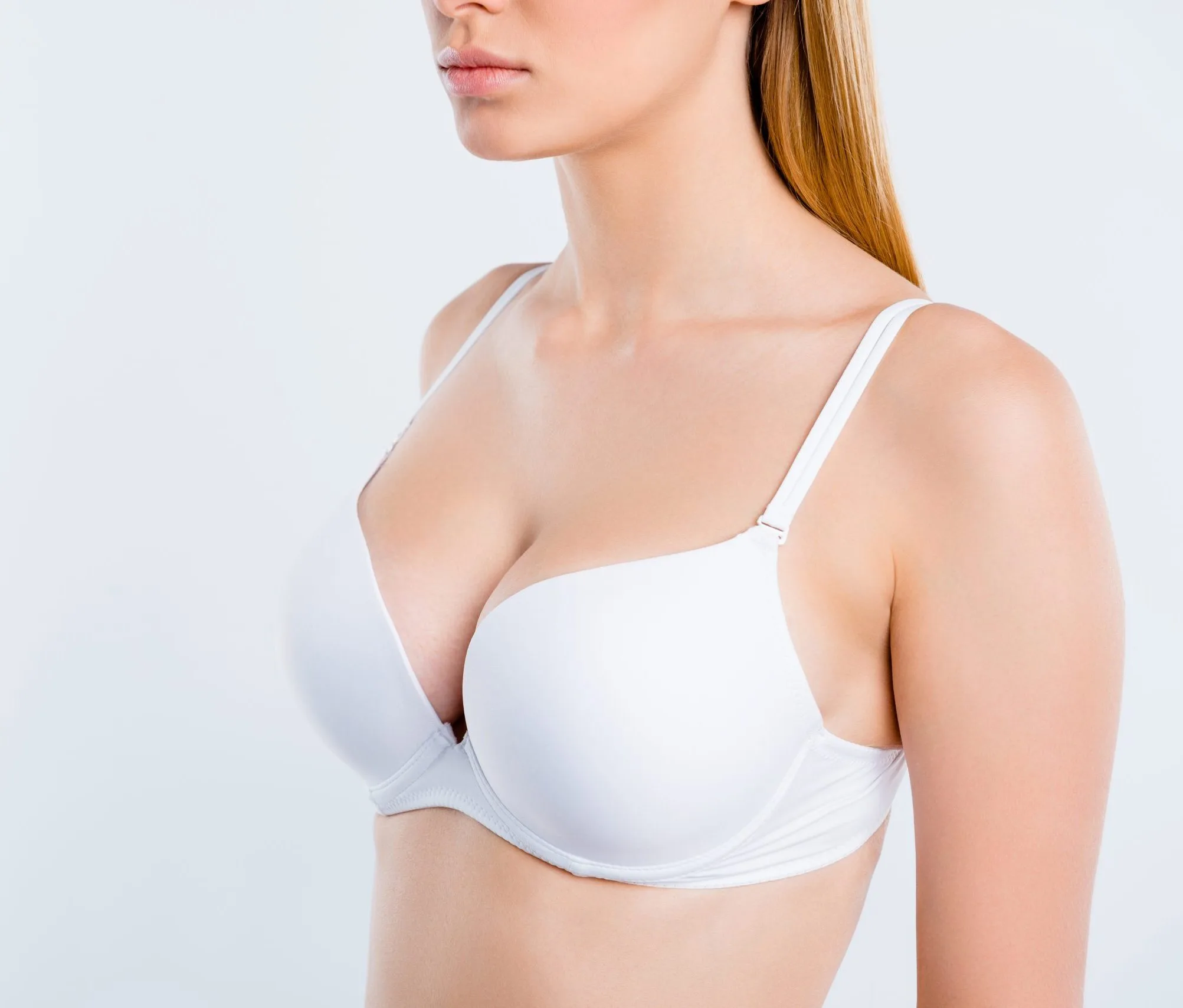
If you want fuller breasts but worry about weeks of soreness, a visible scar, or losing feeling you’d rather keep, you’re asking the right questions. Many women tell us these concerns matter more to them than implant size. Preservé is a newer, less invasive breast augmentation designed to preserve the functionality of natural breast tissue, including nipple sensation and chest muscle function. Instead of cutting and cauterizing to build a pocket for the implant, the surgeon gently creates space with specialized tools through a small incision. The goal is a natural-looking result with less trauma to your body along the way. It isn’t right for everyone, so let’s walk through how it works and who it suits best.
Traditional augmentation usually involves dissecting tissue to form a pocket for the implant. Preservé takes a softer route, and two steps make the difference.
Rather than being surgically cut, the pocket is gently expanded using an inflatable balloon. A small channel separator then helps refine the space. Think of it as easing the tissue apart along its natural layers rather than carving through them. The implant sits in front of the chest muscle, so that muscle isn’t disturbed.
The implant travels through a sleeve, so it slides into place without touching the skin. That keeps the delivery clean and allows for a smaller incision.
“I trained in complex reconstruction, where protecting a single tiny nerve can decide whether a patient feels her own body again. That mindset never left me. When someone asks me for a new shape, I also want her to keep everything that already works.”
– Dr. Chris Devulapalli
Both approaches add volume with implants. The difference is in how the surgeon gets there.
Pocket creation: Gentle expansion with a balloon, compared with cutting and cautery.
Chest muscle: Left alone, compared with the partial muscle coverage achieved by the dual-plane method used in our standard breast augmentation.
Incision: Smaller.
Internal support: Natural support structures and nerve pathways are protected as much as possible.
The muscle piece matters more than most people realize. When an implant sits partly under the muscle, flexing your chest can occasionally shift it. Placing it in front of the muscle avoids that.
Patients drawn to Preservé usually want a subtle, natural outcome and a smoother early recovery. Potential advantages include:
A more natural look and feel, since your own tissue stays intact
Better odds of keeping nipple and breast sensation
Smaller, less noticeable scars
A gentler early recovery for many patients
Stable implant support over time
The technique is designed to protect nerve pathways, which may help preserve nipple sensation and support future breastfeeding. “May” is the honest word here. No technique guarantees a result, and every body heals differently.
“Patients often assume the implant is the whole story. It isn’t. The tissue around it decides how your result looks in five years, not just five weeks. Every structure we protect is an investment in the long game.”
– Dr. Michael Sosin
Preservé works best for women who want natural-looking volume and have breasts that already sit in a good position. You may be a strong fit if you:
Want a modest to moderate increase in size
Have little or no sagging
Value keeping sensation and natural movement
Want a smaller scar and a smoother early recovery
Preservé is not a breast lift and does not allow repositioning or lowering of the inframammary fold. If your nipples point downward or your breasts have lost shape after pregnancy or weight loss, a breast lift combined with implants usually gives better results. Some patients prefer no implants at all, and fat grafting can add subtle volume using your own tissue. If you already have implants and want a change, implant revision is a separate conversation.
Breast anatomy holds some surprises that explain why tissue-sparing surgery is such a big deal.
Breasts have no muscle of their own. They rest on top of the pectoral muscle. That’s why placing an implant in front of or behind that muscle is such an important decision.
Nipple sensation travels a scenic route. Researchers have mapped an “unsafe zone” in the lower outer part of the breast where dissection should be avoided to preserve nipple sensation. Nerves reach the nipple from the side, not straight through the middle.
Sensation does more than feel good. Nipple stimulation triggers the release of hormones, including oxytocin, which helps milk flow during breastfeeding. Nerves here connect to whole-body systems.
Because the technique aims to disturb less tissue, many patients report a gentler early recovery than with traditional augmentation. Still, this is surgery. You’ll wear a supportive bra, follow activity limits, and avoid strenuous exercise for several weeks. Swelling fades gradually, and your implants settle into their final position over a few months.
Your surgeon will give you a personalized timeline based on your health, your anatomy, and your job and lifestyle.
Preservé is highly specialized, and it depends on specific instruments and surgeon training. It can cost more than a traditional augmentation. For context, breast augmentation at our practice typically ranges from $7,500–$12,000, depending on the implants chosen and your surgical plan. We’ll give you a personalized quote at your consultation, and our financing options can make planning easier.
One more honest note. Some tools used in Preservé are registered with the FDA and can be used with FDA-approved implants, but one implant used with the technique abroad is not approved in the U.S. We’ll explain exactly which options are available here and which fit your goals.
Bring a list. These are a good start:
Is my anatomy a good match for a tissue-sparing approach?
Where will my incision be, and how noticeable will it be?
Which implant do you recommend for me, and why?
How many patients have you treated with this technique?
What are the realistic risks and limits?
Every woman’s body and goals are different, and the right technique should be chosen for you, not the other way around. You can learn about our surgeons, Dr. Chris Devulapalli in Harrison, NY, and Dr. Michael Sosin in Millburn, NJ, and browse our before-and-after gallery to see the natural look we aim for. When you’re ready, call us at (914) 874-0900 in New York or (973) 561-0900 in New Jersey to book a consultation. We’ll listen first, then build a plan that fits you.
Disclaimer: This article is for general educational purposes and is not medical advice. Results and candidacy vary from person to person, and all surgery carries risks. Only a consultation with a board-certified plastic surgeon can determine whether a specific technique is appropriate for you.

About the Author
Dr. Devulapalli
September 28, 2026