

The right breast implant size is the one that fits your chest width, your natural breast tissue, and your personal goals. A cup size number alone will not get you there. Choosing well means looking at implant volume, profile, and diameter together, then matching them to your body’s measurements with a plastic surgeon. Below, we explain how sizing works, which factors matter most, and how to choose the right breast implant size for your body.
Patients with narrow, broad, petite, and tall builds can all get different results from the same implant volume. The same cc number can look natural on one patient and too large on another.
Before you can decide on a size, it helps to know how implants are measured. Many patients come in thinking in cup sizes. Surgeons think in volume, width, and projection. Knowing both languages makes your consultation more productive.

Breast implants are measured in cubic centimeters, written as “cc.” This number tells you how much filler is inside the implant. It does not tell you what cup size you will wear.
Cup sizes are not standard. A C cup from one brand may fit like a B or a D from another. Your band size also changes what a cup letter means. A 300 cc implant can look like a full C cup on a petite frame and a modest B cup on a broader frame.
For this reason, we do not promise a specific cup size. We focus on volume and fit, which are measurable and repeatable.
Profile describes how far an implant projects forward from the chest wall. Two implants with the same cc volume can look very different. A lower profile implant spreads its volume across a wider base. A higher profile implant pushes the same volume forward on a narrower base.
Profile affects upper breast fullness, side fullness, and how much the breast stands out from the chest. For many patients, choosing the right profile does more to shape the final look than adding or subtracting volume.
No single size works for everyone. Several personal factors guide the choice.
Your chest width sets the starting point. A patient with a narrow chest has less room for a wide implant. A patient with broad shoulders and a wide rib cage can often carry more volume while still looking proportionate.
Height, shoulder width, and hip width also matter. Many patients want their chest to look balanced with their hips and waist. An implant that suits a tall, broad frame may overwhelm a petite one.
How much breast tissue you already have changes how an implant looks and feels. More natural tissue gives the implant more coverage. This can help create a softer, more natural edge.
Skin elasticity matters too. Tight skin may limit how much volume fits comfortably at first. Looser skin, often seen after pregnancy, breastfeeding, or weight loss, may need more volume to fill the breast. Some patients with sagging also benefit from a breast lift combined with augmentation, since an implant alone does not raise the nipple position.
Your body will keep changing after surgery. Pregnancy, breastfeeding, weight changes, and aging all affect breast tissue. Patients who plan to have children may want to factor this into their size choice.
A size that suits you at 25 should still suit you at 45. Thinking ahead helps you choose an implant you will be happy with for years.
Active patients often prefer a moderate size. Runners, cyclists, yoga students, and patients who lift weights may find that a smaller implant feels more comfortable during exercise. Larger implants add weight, which some patients notice during high-impact activities.
Your job matters as well. Patients with physically demanding work may favor a size that stays out of the way.
Think about how you want your clothes to fit. Some patients want to fill out swimsuits and fitted dresses. Others want a subtle change that looks good in a T-shirt and still lets them wear their current wardrobe.
Your goals are personal. Some patients want to restore volume lost after having children. Others want a fuller look they have always wanted. Being honest about your goals helps your surgeon recommend the right size.
Once your goals and anatomy are clear, the decision comes down to three measurements: volume, profile, and diameter.
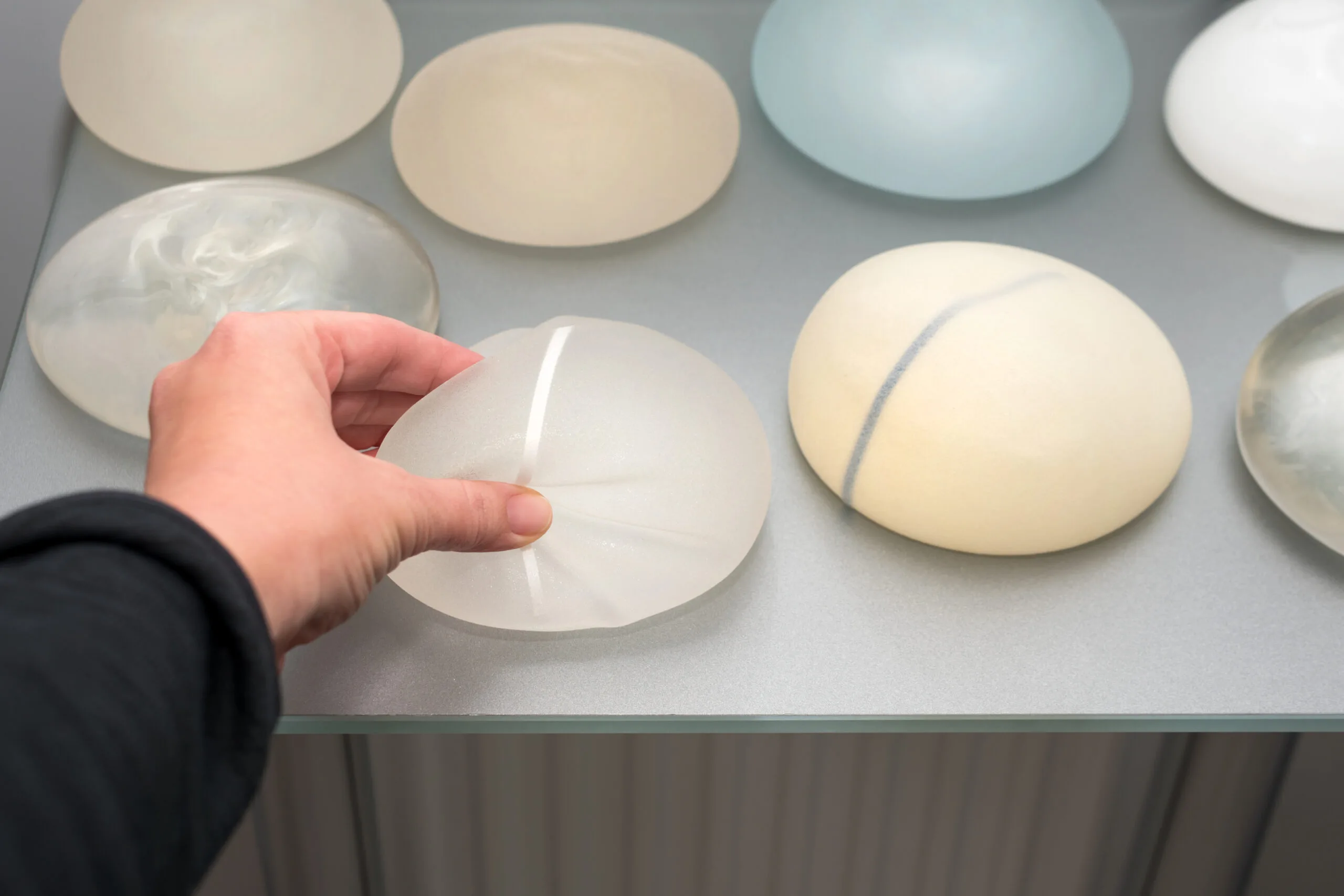
Volume is the most familiar number. Implants come in a wide range of volumes. Small changes in cc often make less visible difference than patients expect, especially on a broader frame.
Volume should never be chosen in isolation. Volume works as part of a full sizing plan.
We offer ® breast implants, which come in three projection options: mini, demi, and full. Mini projection gives a subtle, natural lift. Demi projection adds moderate fullness. Full projection creates a more striking silhouette with more forward projection.
breast implants use silicone gel technology designed to allow more natural movement and feel while keeping their shape. These choices let you customize your look to what suits your body.
Diameter is the width of the implant’s base. It is one of the most important measurements in sizing. The implant should fit within the natural width of your breast.
An implant that is too wide for your chest can push toward the armpit or look unnatural at the sides. An implant that is too narrow may leave a gap between the breasts or look too round. Matching diameter to your measured breast width is how surgeons create a result that looks like it belongs on your body.
Choosing an implant is a shared decision. Your goals set the direction. Your anatomy sets the limits.
Your consultation starts with what you want. Dr. Devulapalli will ask how you want your breasts to look, what bothers you about them now, and how you want clothes to fit.
Many patients bring photos of results they like. These photos help show the general look you want, such as natural and soft or full and rounded. They are a starting point. The goal is a result that suits your body, not a copy of someone else’s.
After your goals are clear, your surgeon measures your chest. Key measurements include breast width, the distance from the nipple to the fold under the breast, and the thickness of your tissue. Skin stretch is checked as well.
These numbers narrow the options to a range of implants that will fit well. Every breast augmentation plan at our office includes a detailed assessment of anatomy. We select implant size and profile based on chest measurements and tissue characteristics to support balanced, proportionate results.
A sizing consultation brings your goals and your measurements together. Many patients try on sizers inside a fitted bra and a T-shirt. This gives a rough idea of how different volumes change your shape.
Seeing yourself with a few options side by side often makes the choice easier. Many patients find that the size they expected is not the size they end up liking most.
An implant adds volume and shape. It cannot change the width of your chest, the spacing between your breasts, or the quality of your skin. Some differences between the two sides are normal, since most people have some natural asymmetry.
Your result will also change over the first months as swelling goes down and the implants settle. Knowing this ahead of time helps you judge your result fairly.
Several tools can help you explore sizes before and during your consultation. None of them replace a hands-on assessment.
Online size calculators ask for details such as your height, weight, band size, current cup size, and the cup size you want. They then suggest a volume range.
These tools give a general idea. They do not measure your breast width, tissue thickness, or skin stretch. They also cannot account for profile and diameter.
Treat calculator results as a rough estimate. If a calculator suggests a range, bring that number to your consultation as a talking point.
Your surgeon may recommend a size above or below that range once your measurements are taken. That is normal. The calculator only knows the numbers you typed in, while your surgeon is looking at your actual anatomy.
The rice test is a simple way to try out volume at home. You fill a plastic bag or a nylon stocking with uncooked rice, then place it inside your bra. One cup of rice is roughly 240 cc, so you can measure out amounts that match implant volumes you are considering.
Wear your rice sizers around the house for a day. Try them under different shirts. This helps you get used to the added volume and weight.
The rice test has limits. Rice sitting on top of your breast looks different from an implant placed beneath your tissue. Use it to explore your comfort with size, then fine-tune the decision with your surgeon.
Both smaller and larger implants have benefits. The right choice depends on your frame and your goals.

Smaller implants tend to look more natural on many frames. They blend well with existing tissue and keep the breast’s natural slope.
They also feel lighter, which many active patients appreciate. Smaller implants usually fit a wider range of clothing and bra styles without much change to your wardrobe. They place less weight on the skin and tissue over time.
For patients who want a subtle, “did she or didn’t she” look, a smaller implant is often the right fit.
Larger implants create a more noticeable change. They add more upper fullness and cleavage, which some patients want for a fuller silhouette.
Patients with broader frames can often carry more volume while still looking proportionate. Larger implants can also restore fullness for patients who lost significant volume after pregnancy or weight loss.
The tradeoff is weight and fit. Larger implants may change how clothes fit and how you feel during exercise. Your measurements will show how much volume your body can carry while still looking balanced.
Size is one of the biggest decisions in breast augmentation. A little planning goes a long way.
Your implant size should match your body, not a trend. Styles change, but your frame does not.
Keep in mind that many patients wish they had chosen a slightly different size. Taking time to try sizers, review measurements, and think about your daily life helps you avoid second-guessing. For patients who want to change size later, implant revision is an option, but getting it right the first time is the goal.
Some patients want only a modest increase. For them, fat grafting may be worth discussing as an alternative or addition to implants.
Learning how to choose the right breast implant size for your body comes down to a few practical steps:
Know your goals. Decide whether you want a subtle change or a fuller look.
Trust your measurements. Breast width and tissue thickness narrow your options more than cup size.
Consider profile. Mini, demi, and full projections change the look even at the same volume.
Think long term. Plan for future pregnancies, weight changes, and aging.
Test at home. Use rice sizers to get used to volume and weight.
Ask questions. A clear conversation with your surgeon helps you feel confident in your choice.
Dr. Chris Devulapalli is a board certified, fellowship trained plastic surgeon who sees breast augmentation patients at our Harrison office. Breast surgery is one of the main focus areas of his work. That includes cosmetic augmentation, lifts, reductions, and breast reconstruction.
Every consultation with Dr. Devulapalli starts with your goals. He then reviews your measurements, tissue, and skin to explain which implant options fit your body and why. You leave with a clear plan that covers volume, profile, and diameter.
Patients who want to understand how to choose the right breast implant size for your body get direct answers rather than a sales pitch. You can learn more about his background on Dr. Devulapalli and read about our philosophy.
Dr. Devulapalli uses ® implants, which offer three projection options to match a range of goals and frames. He selects size and profile based on each patient’s chest measurements and tissue to support proportionate results.
Recovery planning is part of the process as well. Our team uses an enhanced recovery protocol with nerve blocks to support patient comfort after surgery. To learn more about the procedure itself, visit our breast augmentation page.
The right implant size balances your goals with your anatomy. Volume, profile, and diameter work together, and chest width matters more than any cup size number. Online calculators and the rice test can help you explore options, but a hands-on assessment with your surgeon gives you the clearest answer. Dr. Devulapalli and our team in Harrison, NY help each patient choose an implant that fits their frame, lifestyle, and long-term plans.